POE WILL BE THE NEW VANGUARD IF THEY DONT CHANGE SHIT UP
" It still would have detectable desync through multiplayer and server-side only processes (dropping items etc.). And resync is not feedback. Feedback is part of the process, a closed loop process simply means the output of the process (in this case the server-side calculation) is looped back and included with future inputs. Resync is simply overwriting the state of the system, it's not part of the system. My vision for a better PoE: http://www.pathofexile.com/forum/view-thread/863780
|

|
"You mean visible to others when they view you, but not to you viewing yourself? If so, then correct. However, if dropping items is something which the server sends to the client when it believes the client's player has killed monsters, then that's feedback. "Wrong. Anything the client claims which is either corrected or verified by the server is feedback. This means the vast majority of messages from the server to the client are feedback. When the client says a player is one place, then the server says otherwise, and the player's position is adjusted on the client as a result, that's feedback. Which means: /oos is feedback. When a monster is killed and drops items, where items drop is a form of feedback; the implication is that a monster was at that location when it died. Which items drop, and whether any items drop at all, and even when the items are dropped, is not feedback in that situation, since the client does not make claims to know drop rate nor perform damage calculations. However, when you drop an item from your inventory to the ground, not just where, but also when, which and whether items drop is feedback. When you receive a whisper from another player, that isn't feedback. When Stephen Colbert was killed by HYDRA's Project Insight in 2014, the comedy world lost a hero. Since his life model decoy isn't up to the task, please do not mistake my performance as political discussion. I'm just doing what Steve would have wanted. Last edited by ScrotieMcB#2697 on Feb 16, 2014, 6:26:51 AM
|

|
" By your generalized definition, yes. By the definition within the context of a closed-loop system, no. Feedback within that context means this: 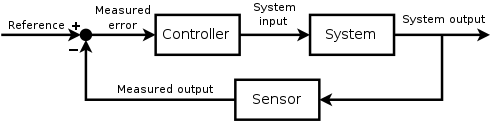 It doesn't refer to any possible response. It refers specifically to a feedback loop that's continually used as input for the system to function as error correction. That's feedback. My vision for a better PoE: http://www.pathofexile.com/forum/view-thread/863780
|
|
" I'm sure it's only economics. Immediate client response doesn't allow you to dodge anything better, it only makes you think so. Server-side, you'll be at the same location whatever communication system you're using. They should just buy tons of server, at this point it's way cheaper than trying to fix this shit. I even doubt economic reasons. After all, when you're in a party, the server has to send all the information about your party members. At this point, sending your own information as well should be almost negligible. Build of the week #2 : http://tinyurl.com/ce75gf4 Last edited by zriL#4590 on Feb 16, 2014, 10:26:21 AM
| |
|
There is no mystery to desync.
It is cheaper and less work for GGG to simply ignore player rage than it is to fix desync. This also applies to all aspects of the game. The first rule of GGG is there is nothing wrong with the game and all criticism will be ignored. "Blue warrior shot the food" Last edited by maxor#5545 on Feb 16, 2014, 10:48:57 AM
|

|
"This is false, because it assumes a mechanical challenge begins with player response, and ends with server receipt of that response; in truth, it begins with the challenge itself, then receipt of that challenge by the client, then player response, then server receipt of that response. In a wait-on-the-server system, the challenge originates on the server, and the client's simulation is chronologically behind the server's. Thus, there is a period of latency before the client ever receives the challenge. Then there is human response time after the client receives the challenge, then additional latency while the player response is delivered to the server... latency + human response time + latency In a predictive system, the challenge originates on the client itself, because the client's simulation is chronologically ahead of the server's. Thus, there is no initial period of latency before the client receives the challenge, although there is still human response time after the client receives the challenge, then latency while the player response is delivered to the server... human response time + latency Of course, this all rests on the premise of the prediction being accurate, that what the client sees of the gamestate is the truth, or at least reasonably similar to the truth. When the predictive system fails, it no longer becomes a matter of delivering the correct responses late, it becomes a matter of delivering a completely different response, one to a situation which doesn't actually exist. When Stephen Colbert was killed by HYDRA's Project Insight in 2014, the comedy world lost a hero. Since his life model decoy isn't up to the task, please do not mistake my performance as political discussion. I'm just doing what Steve would have wanted. Last edited by ScrotieMcB#2697 on Feb 16, 2014, 1:31:31 PM
|
|
" " When I tried to explain the distinctions between technical jargon and layman's terms to you earlier, I was not being condescending, I was giving you the benefit of the doubt. But you rejected that olive branch and plunged well past layman's terms into your own idiosyncratic interpretations of what engineering jargon like "feedback", "open-loop", and "closed-loop" might be stretched to mean in a rhetorical sense. While there may exist some philosophical realm where "/oos is feedback", engineers are trained to make finer technical distinctions than that. " Training is key in this case, because feedback control theory starts with a foundation in calculus and proceeds into topics like impulse and transfer functions, Laplace and Z transforms, Bode plots and pole-zero analysis, and closed-loop stability and transient response. Sorry to bury you in technical jargon, but that's the industry vocabulary, and it typically takes several years of study for budding engineers to master. It's not something you can "research" in a weekend via Google or Wikipedia. Last edited by RogueMage#7621 on Feb 16, 2014, 2:21:23 PM
|

|
" You're right. Forgot that. Still, you said it, "this all rests on the premise of the prediction being accurate". Given how bad is that accuracy, I think I would dodge that challenge better if AI was only server-side. Then they could tweak animations or damage timing to compensate for latency. Build of the week #2 : http://tinyurl.com/ce75gf4 Last edited by zriL#4590 on Feb 16, 2014, 2:22:50 PM
| |
"The really funny part is I was talking about good predictive systems. Path of Exile, for reasons which confound me, has the player's character respond immediately to input — therefore we have rubberbanding — while monsters actually wait on the server for commands before they act — therefore we do not bypass the double latency penalty for mechanical skill tests. GGG's core decision to go with a predictive system was the correct one; however, their implementation is god-awful. Through gross negligence, we've managed to get the worst of both worlds. When Stephen Colbert was killed by HYDRA's Project Insight in 2014, the comedy world lost a hero. Since his life model decoy isn't up to the task, please do not mistake my performance as political discussion. I'm just doing what Steve would have wanted. Last edited by ScrotieMcB#2697 on Feb 17, 2014, 1:48:40 AM
|
|
" Are you saying there is no AI done client-side ? I think mobs continue moving when the player is disconnected. But now that I think of it, it might only be them following their last order... Build of the week #2 : http://tinyurl.com/ce75gf4
|